


Gas vs. Electric Water Heaters: Which Is Right for Your Columbia Home?
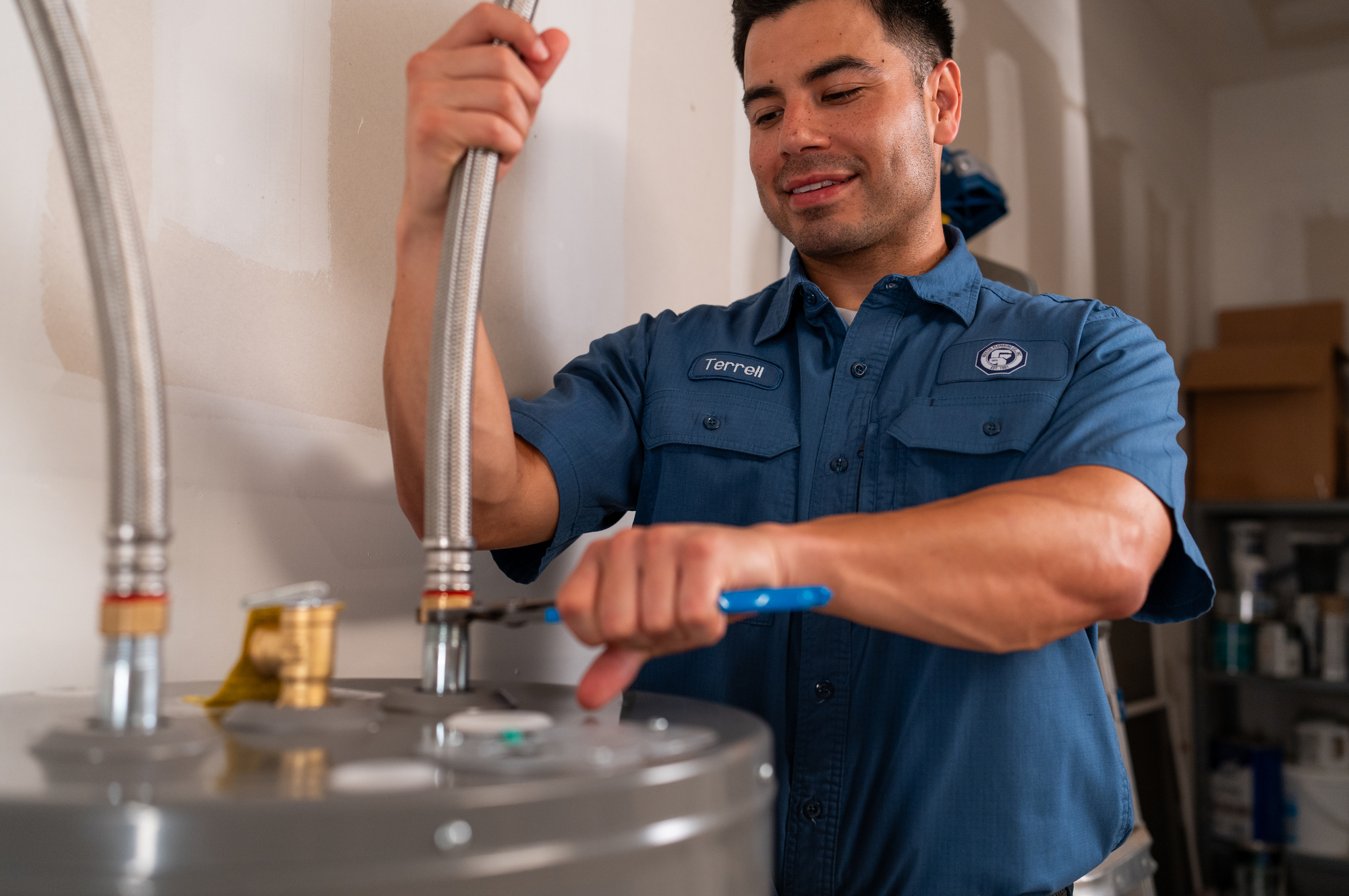
Electric storage water heaters generally use a greater share of the energy they consume to heat water, while gas models recover hot water faster and often cost less to operate. For Columbia homeowners, start by finding out if the house already has natural gas service because adding a fuel supply changes the scope of installation.
Quick Comparison: Gas vs. Electric Water Heaters
Here is the gas vs electric water heater comparison at a glance:
| Comparison | Gas Water Heater | Electric Water Heater |
|---|---|---|
| Upfront Unit Cost | Depends on model | Depends on model |
| Installation Requirements | Gas supply and venting, plus electrical needs on some models | Proper electrical circuit and connections |
| Typical Operating Cost | Often lower where natural gas rates are favorable | Depends on electric rates and efficiency |
| Recovery Speed | Generally faster | Slower for standard resistance tanks |
| Lifespan | Depends on equipment, water quality, use, and maintenance | Depends on equipment, water quality, use, and maintenance |
| Power-Outage Behavior | Depends on ignition and venting design | Requires electricity |
Does Your Columbia Home Have a Gas Hookup?
Not every Columbia home has natural gas service. Before comparing equipment, check if gas is already available at the property.
If you already have an electric water heater and no gas service, switching fuels requires additional work beyond replacing the tank. Gas availability, fuel piping, venting, and the selected equipment all need to be addressed.
If you are open to equipment that heats water without storing a full tank, tankless water heaters are another popular option to compare before choosing a replacement.
Is Gas or Electric Cheaper to Run?
Electric storage water heaters are generally more energy-efficient at the equipment because they do not lose heat through a flue. That does not automatically make them cheaper to operate.
Natural gas often costs less per unit of energy than electricity, so a gas water heater can have a lower monthly operating cost even with greater heat loss. Your actual gas vs electric water heater cost comparison depends on local utility rates, equipment efficiency, and how much hot water your household uses.
If your existing heater suddenly stops producing hot water, we check what failed before assuming you need a different unit. When the equipment is still worth repairing, we explain the water heater repair needed.
Which Heats Water Faster: Gas or Electric Water Heaters?
Gas storage water heaters generally recover hot water faster than standard electric resistance models. That difference is useful in homes where several showers, laundry, and other hot-water use happen close together.
If your household spreads hot water use throughout the day, recovery speed has less influence on the choice between gas and electric.
Does a Gas Water Heater Work in a Power Outage?
Some gas water heaters with a standing pilot and no powered venting operate without household electricity. Many modern gas units use electronic ignition, powered controls, or a blower for venting. Those models require electricity and stop operating during an outage.
If you have a standing-pilot model that has gone out during normal operation, follow the manufacturer’s instructions for relighting a pilot light instead of assuming every gas heater uses the same procedure.
Electric water heaters require electrical power to heat the water.
Which Should You Choose for Your Columbia Home?
If the house already has gas service and your household goes through a lot of hot water in a short period, gas gives you faster recovery and often lower operating costs.
Electric makes sense when the home does not have gas service or you want an installation without combustion venting. Before switching from electric to gas, we look at the added fuel and venting work rather than comparing the tanks alone.
If an electric unit stops heating, check the breaker first. Our guide to resetting an electric water heater explains the safe homeowner checks before you schedule service.
Meetze Plumbing Installs Both in Columbia, SC
Meetze Plumbing has served Columbia since 1981. Our plumbers work on both gas and electric water heaters, so we look at the equipment already in your home and explain what changes with each replacement option.
Sediment builds up in either type of storage tank. Flushing your water heater removes that buildup, and during routine maintenance we check the tank and its connections for problems that need attention. Schedule an appointment online or call us at (803) 525-2421 today for guidance on the best water heater installation for your home’s needs.
FAQ
Can I switch from electric to gas water heater?
Yes, if natural gas is available at the property and the required gas piping and venting can be installed. We check those requirements before replacing an electric unit with gas equipment.
Which lasts longer, a gas or electric water heater?
Fuel type alone does not determine how long a water heater lasts. Tank construction, water quality, maintenance, operating conditions, and the individual equipment all affect service life.
Is it more expensive to install a gas or electric water heater?
Gas installation involves fuel piping and venting requirements that electric resistance tanks do not have. The actual installation cost depends on what utilities and connections are already present at the home.
Are electric water heaters safer than gas?
Electric water heaters do not burn fuel, so they do not have combustion or flue-gas concerns. Gas water heaters require correct fuel connections, combustion air, and venting for safe operation.
How do I know if my home has a gas line for a water heater?
Look for existing gas appliances and a gas meter, but do not assume that confirms the water heater location has a usable gas connection. A plumber can check the existing gas service and what would be required for the new water heater.


"*" indicates required fields